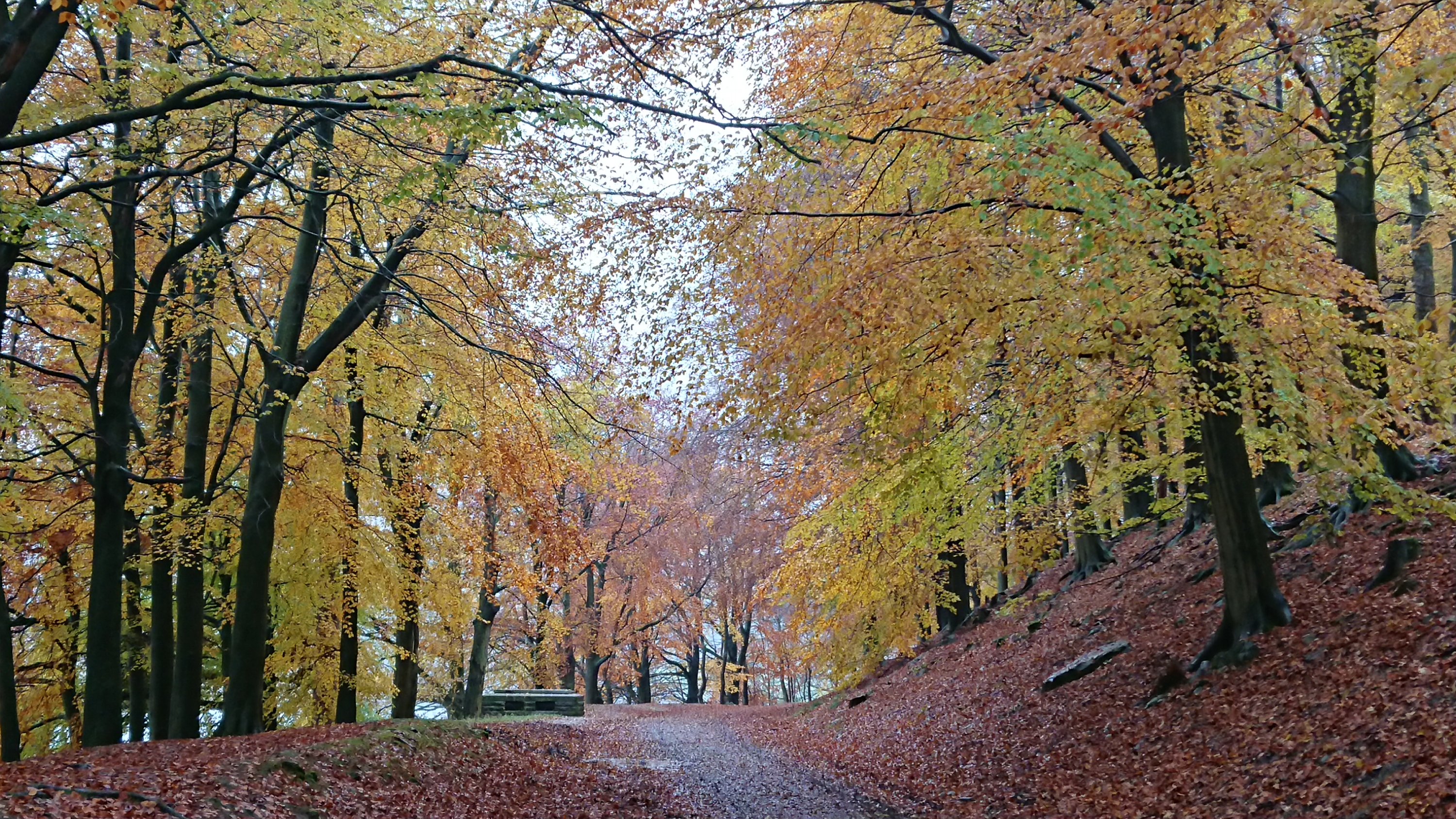
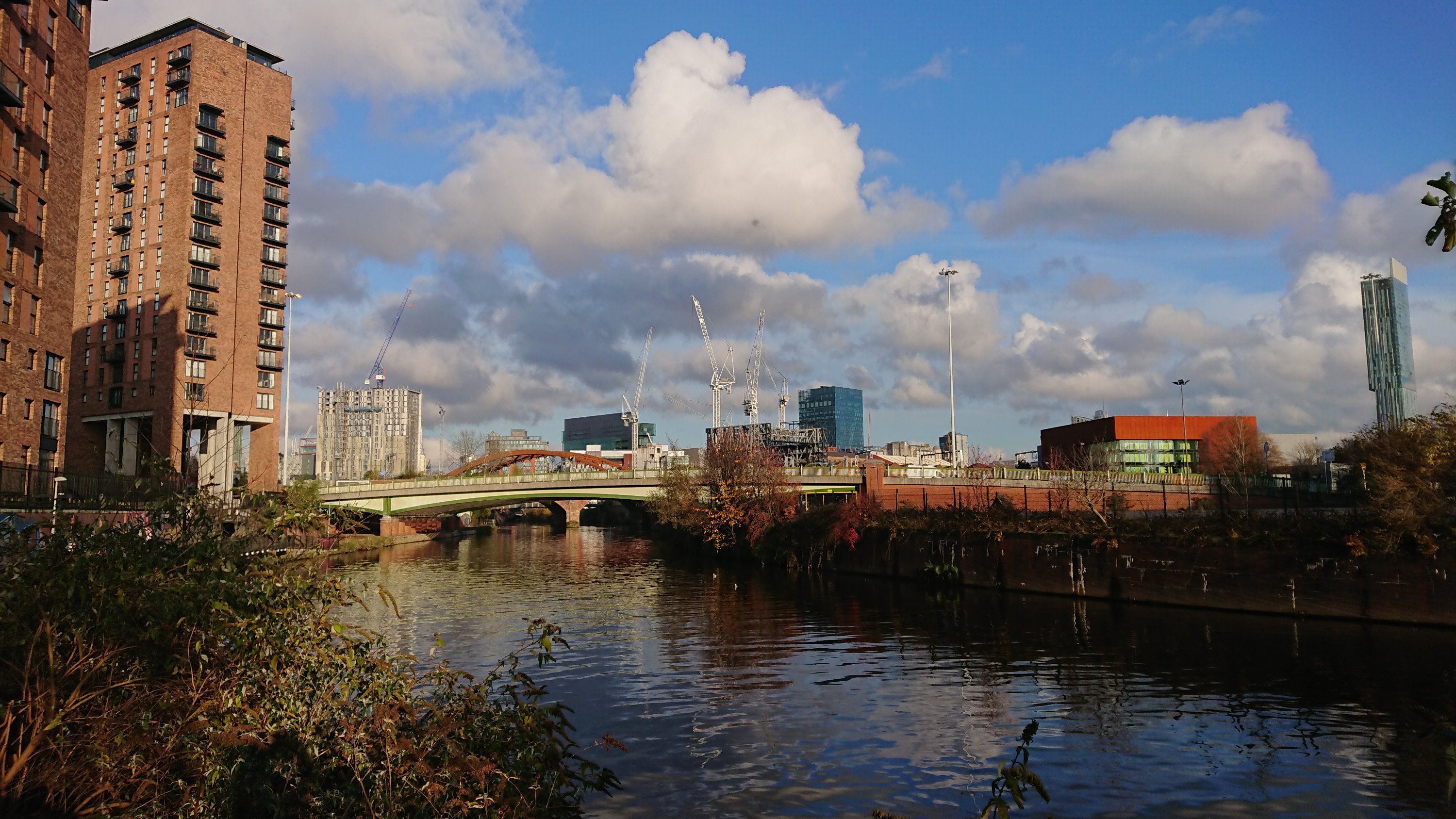
Today was a clear, bright day and I happened to be my birthday so we decided on a walk in Manchester. Bob has been urging an exploration of the River Irwell Sculpture Trail for sometime so we agreed to try that.
Getting onto it turned out to be a bit more tricky than we’d expected. There’s always quite a lot of building work in Manchester City Centre and some of this had closed the routes we had planned to take.
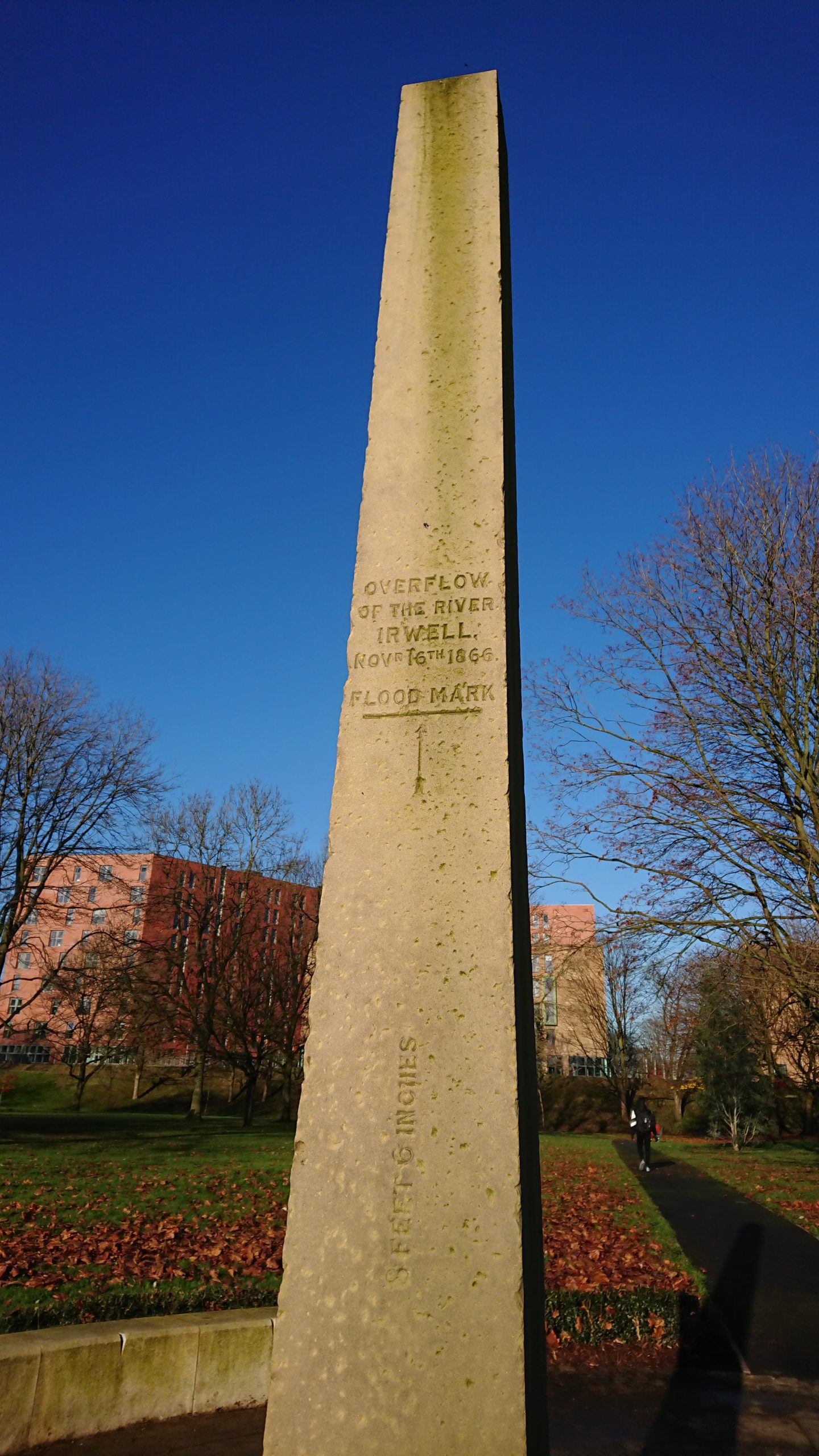
 Eventually we joined the riverside path at Salford University and Peel Park. In the park there’s an interesting flood marker recalling the floods on the Irwell in November 1866 when it flooded to a height of eight and a half feet. The marker was reused in October 1870 when a slightly smaller flood of four feet and three inches was notched up.
 There were a few other sculptures in the park but most of them are further on and we didn’t get far enough to see them today. We carried onto Agecroft Cemetery and then walked back to Pendlebury to catch a bus.
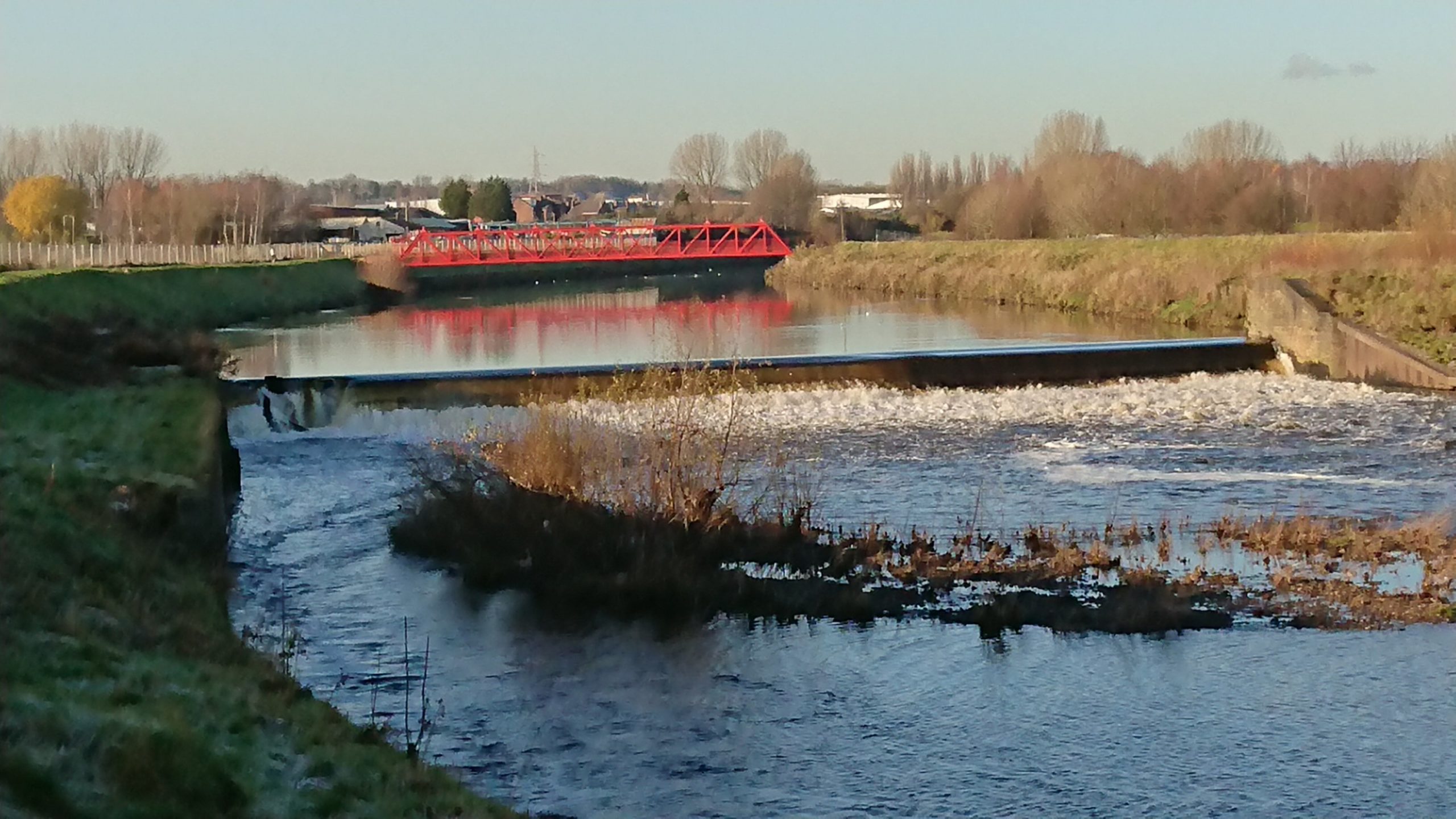
From the Song of Solomon
Many waters cannot quench love, neither can floods drown it.
We remember those still struggling in the aftermath of recent floods. The water may recede but challenges remain.
God grant a quiet night
JAL 29.11.2019 River Irwell.
 The Peak Forest Canal was begun in 1794 but was not completed until 1805. Our route today revealed the challenges that contributed to the delays in its completion. There were two long tunnels. The first was the Woodley Tunnel which is 176 yards long, and very dark as we walked through. The second was the Hyde Tunnel but you can’t walk through that one so we took the route over the top.
 Just before Marple was the Marple Aquaduct. It was finally opened in 1800 and carries the canal 100 feet above the River Goyt. It is the tallest masonry arch aquaduct on our canal network.
 It leads into the beginning of the Marple Locks, a line of 16 locks that bring the canal into line with the Macclesfield canal. The two canals meet at the toll house on the edge of Marple where we met one of the volunteers with the Canal and Rivers Trust.
 From lock 16 the route levelled out again and we made our gentle way into New Mills where we caught a bus back to Glossop. A brilliant route and a lovely day. The highlight was a lesser spotted woodpecker: easier to spot when there are fewer leaves on the trees.
 We crossed onto the Fallowfield Loop which was the former Manchester, Sheffield and Lincolnshire Railway. It opened in 1892 but it has been a Sustrans route, part of the National Cycle Network, since at least 2002.
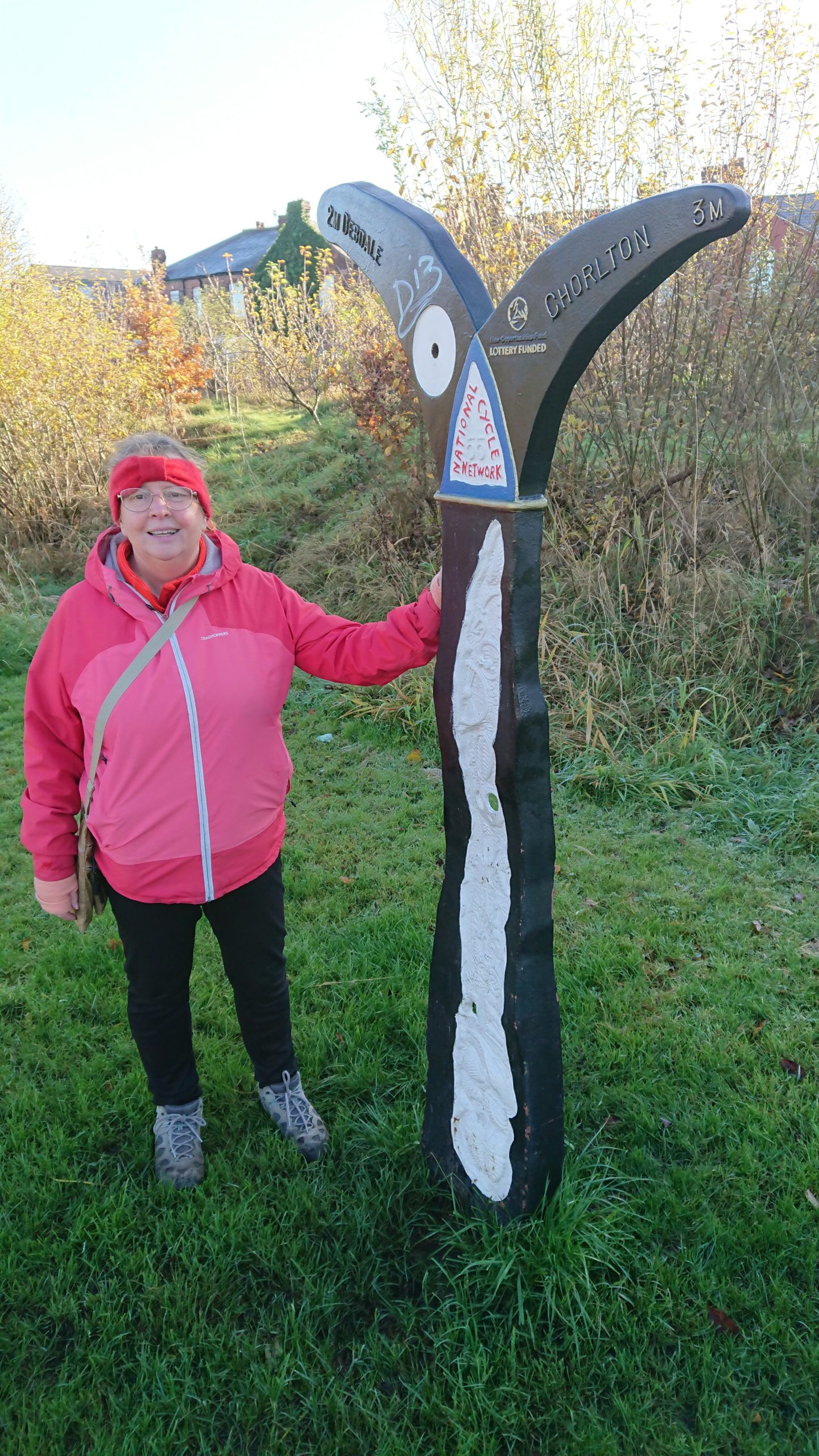 The bright sunshine melted the overnight frost and many of the leaves showed up golden yellow.
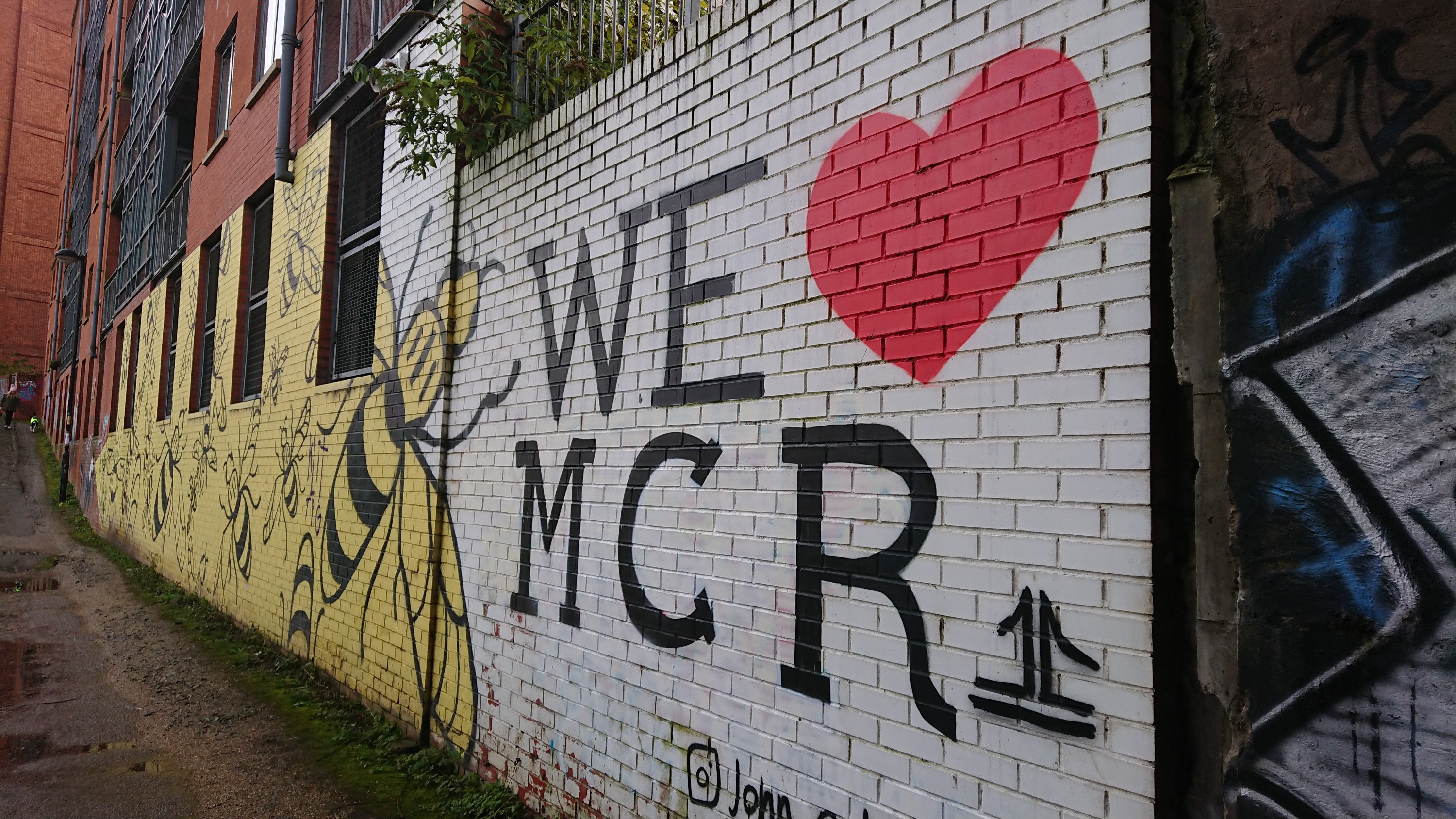
 We made good progress towards Chorlton, where we took a brief detour to see the two places Bob had lived in Manchester over 30 years ago, before we met. Then it was back Wilbraham Road where we found an excellent cafe (there were lots to choose from) with previously mentioned first class cake.
 Canals provide popular walking routes. Flat tow paths well maintained make walking easy. However wet leaves on the paths, particularly on a few steep sections, made conditions a bit trickier today.
 At the IWMN we enjoyed a soup and cake lunch and explored some of the exhibits, particularly those about WW1. We then crossed the Manchester Ship canal and walked through Media City.
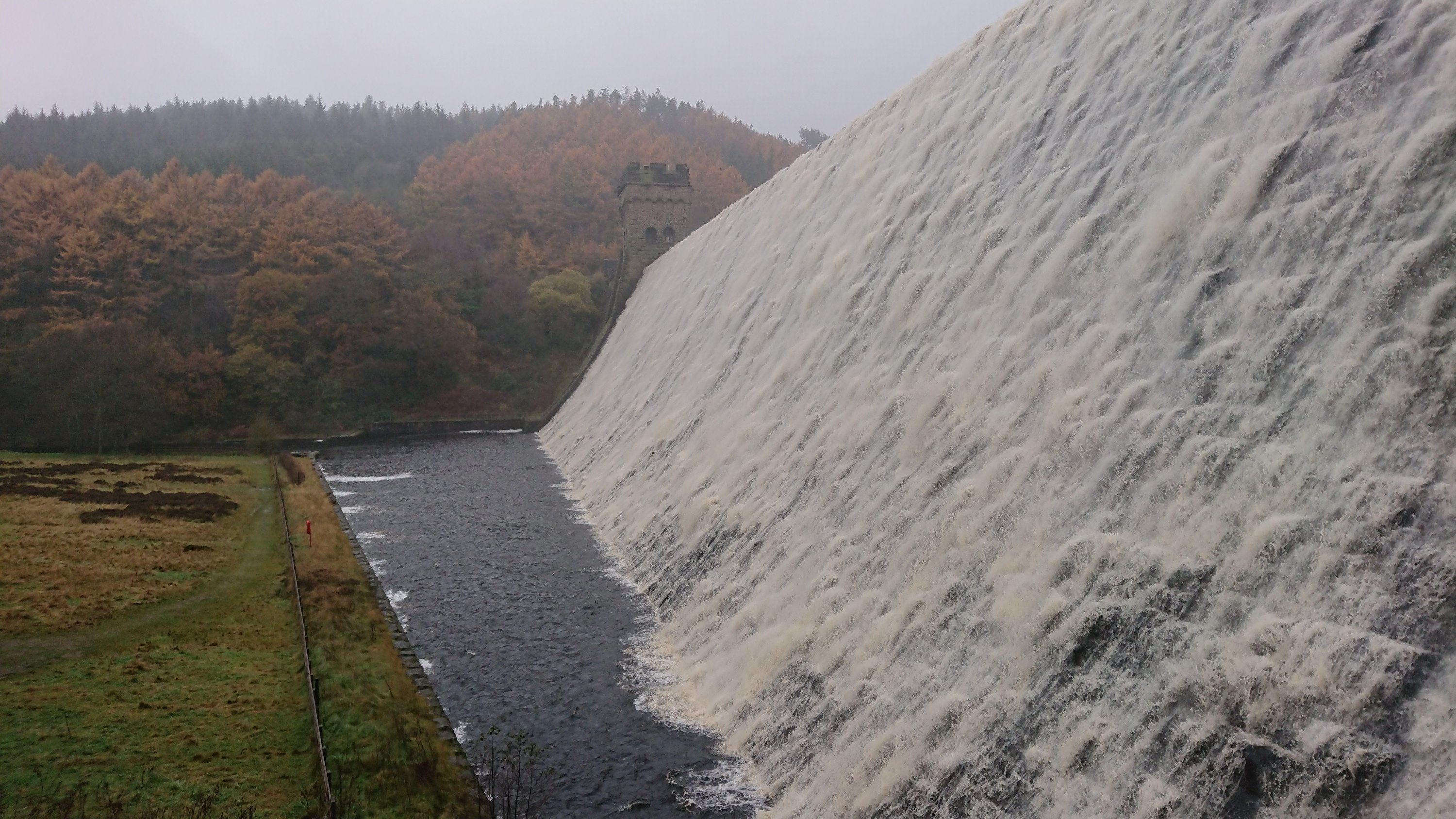
 The bridge at Slippery Stones marks the transition from one side of the valley to the other. The King’s Tree, planted in 1945, is the next landmark. Then on the way back down to the starting point, the site of Birchinlee Village, the former Tin Town of the reservoir building navvies.